System Overview
Bhargavastra represents India's indigenous response to the growing global threat of drone swarms in asymmetric warfare scenarios. Developed by Solar Defence and Aerospace Limited (SDAL), this modular counter-drone system employs a multi-layered defense approach.

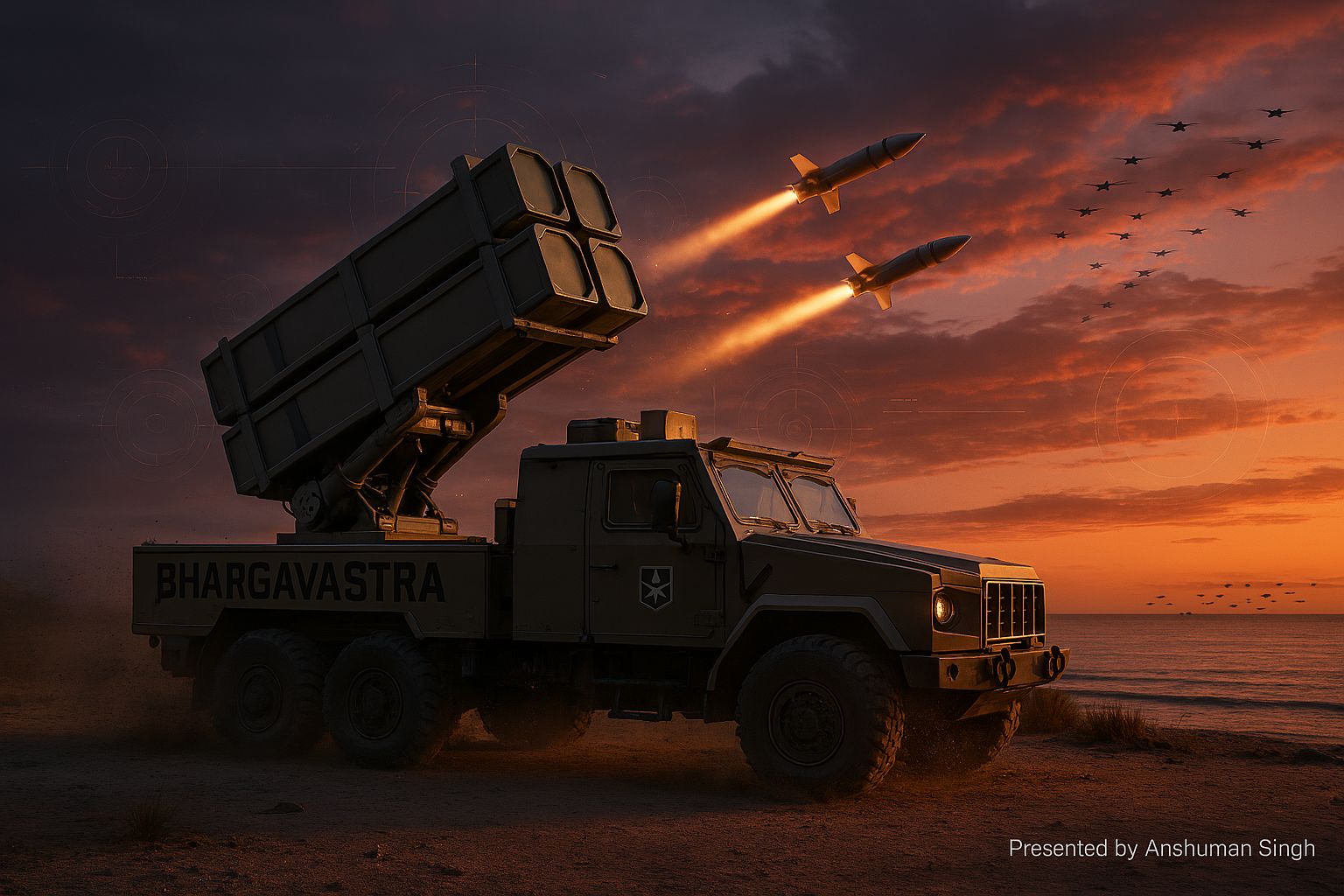
Bhargavastra counter-drone system during field trials at Gopalpur test range
Core Concept: Bhargavastra uses a "hard-kill" approach with two distinct layers of defense—unguided rockets for swarm saturation and guided micro-missiles for precision targeting of high-value drones.
The Drone Threat Landscape
Modern asymmetric warfare has seen a proliferation of cheap, commercial drones being weaponized. Swarm tactics—where multiple drones coordinate attacks—present unique challenges to traditional air defense systems designed for larger, slower targets.
Drone swarm formations pose unique challenges to air defense

Multi-layered defense architecture schematic
Technical Specifications
| Parameter | Specification |
|---|---|
| Detection Range | Up to 2.5 km for small drones (0.1 m² RCS) |
| Engagement Range | Layer 1: 1-2 km; Layer 2: Up to 3 km |
| Lethal Radius | ~20 m for unguided rocket salvo |
| Response Time | < 5 seconds from detection to engagement |
| System Mobility | Vehicle-mounted, rapid deployment |
| Salvo Rate | 2 rockets within 2 seconds |
Sensor Suite
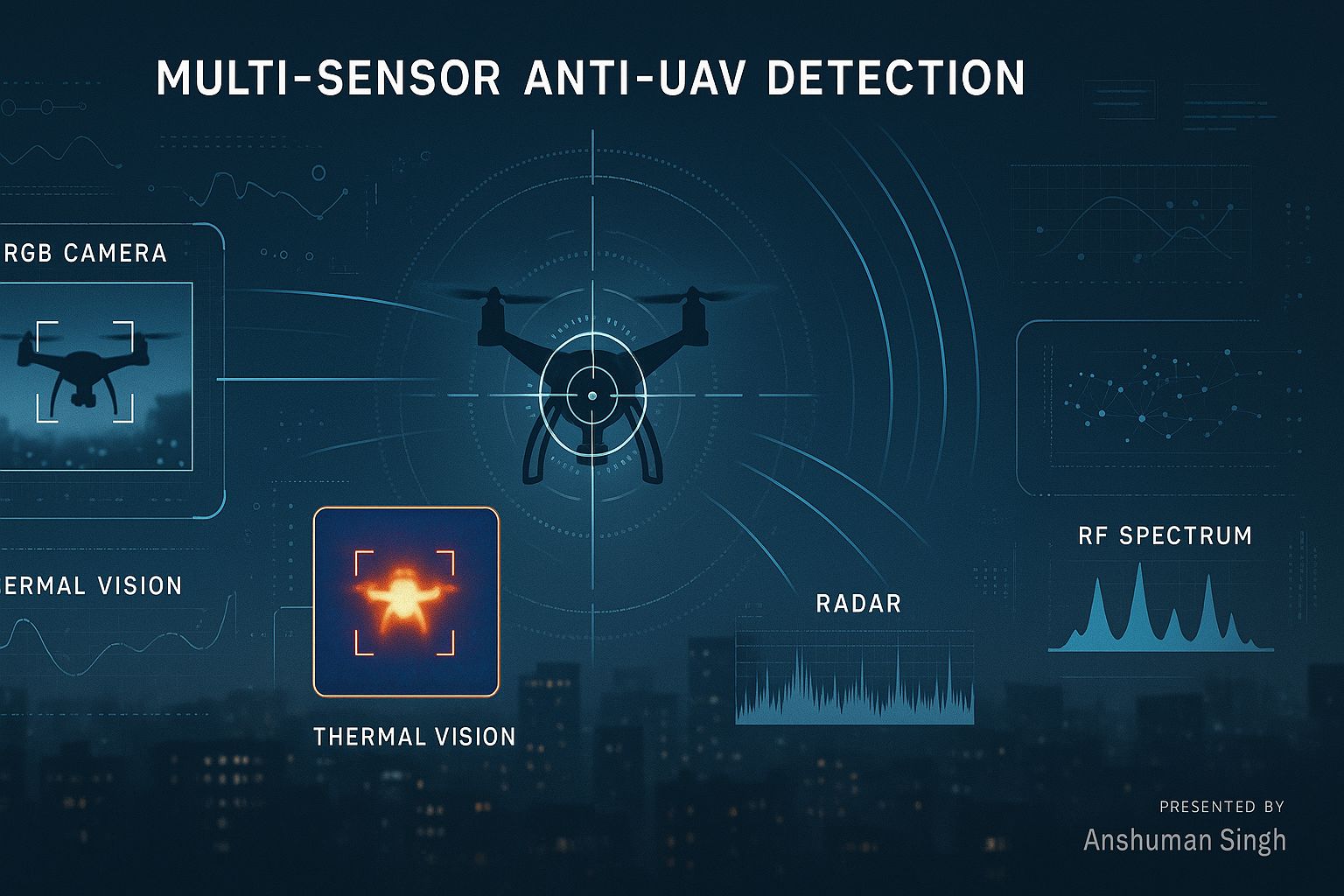
- Radar: Primary detection and tracking (X-band for small targets)
- EO/IR Camera: Electro-optical/Infrared for visual confirmation
- RF Detector: Radio frequency detection of drone communication links
- Multi-sensor Fusion: AI-driven data integration for target classification
Weapon Systems
The system employs two distinct weapon types:
Operational Concept & Testing
Test firing sequence showing salvo mode (two rockets in two seconds)
May 2025 Test Series
The system underwent comprehensive testing at the Seaward Firing Range in Gopalpur, Odisha:
- Single-rocket firings: Validated guidance and propulsion systems
- Salvo mode testing: Two rockets fired within two seconds for swarm engagement
- All-weather testing: Performance validation under various environmental conditions
- Integration testing: Sensor-shooter coordination and network integration
Layered Defense Strategy
Cost-Effective Engagement: The two-layer approach allows using cheaper unguided rockets against swarm drones while reserving more expensive guided missiles for high-value targets.
- Detection & Tracking: Radar detects incoming drones at 2.5 km range
- Classification: AI algorithms classify targets as swarm or high-value
- Weapon Selection: System automatically selects appropriate countermeasure
- Engagement: Unguided rockets for swarms, guided missiles for priority targets
- Assessment: Battle damage assessment and re-engagement if needed
AI & Network Integration
Bhargavastra is designed for network-centric warfare environments:
AI Capabilities
- Target Classification: Machine learning algorithms distinguish between different drone types
- Swarm Pattern Recognition: Identifies coordinated attack patterns
- Predictive Tracking: Anticipates drone movements based on behavior patterns
- Sensor Fusion: Combines data from multiple sensors for accurate tracking
Network Integration
Bhargavastra ↔ Command Center ↔ Other Assets
Real-time data sharing with other defense systems
The system can integrate with:
- National Command Networks: For strategic coordination
- Other Counter-Drone Systems: For layered area defense
- Air Defense Grids: As part of integrated air defense
- Soft-Kill Systems: Jamming and spoofing capabilities
Strategic Significance
For India's Defense Ecosystem
- Indigenous Development: Reduces dependency on foreign systems
- Cost-Effective: Lower cost per engagement than traditional missiles
- Scalable: Modular design allows for various configurations
- Export Potential: Competitive solution for global market
Global Counter-Drone Trends
Bhargavastra aligns with global trends in counter-drone technology:
Future Warfare: As drones become cheaper and more accessible, cost-effective countermeasures like Bhargavastra will be crucial for protecting critical infrastructure and military assets.
Comparison with Global Systems
| System | Country | Approach | Key Feature |
|---|---|---|---|
| Bhargavastra | India | Hard-kill + Modular | Two-layer, cost-effective |
| Drone Dome | Israel | Laser + RF | Energy-based, silent |
| AUDS | UK | RF Jamming | Soft-kill, non-kinetic |